With yourself
Gestalt-based one-to-one work
One-to-one sessions to hear the voices inside you, notice what you need, and take a step that fits. Career, relationships, parenting, midlife, moving from one stage of life to the next.
“Is this all there is?”
“I keep getting stuck in the same place with my partner, my child, my manager.”
“I can't see a way out.”
“I'm going through a hard time.”
And there's one more voice, from somewhere deeper: “Maybe it can be different.”

None of these voices is bad or wrong; each one is telling you something. Let's listen to all voices and integrate them. In person in Istanbul or online via Zoom.
If you're ready to look together, we can begin.
Gestalt-based one-to-one work
One-to-one sessions to hear the voices inside you, notice what you need, and take a step that fits. Career, relationships, parenting, midlife, moving from one stage of life to the next.
Groups with Deep Democracy and Gestalt
Supervision through a Gestalt lens
As an ICF-accredited coaching supervisor (CSS), I offer individual and group supervision: a safe space to think through what happened in a session alongside what was happening in you.
Evrim Dimitoka“I set out on a journey with Hande. All along the way, I felt safe, motivated and strong.”
Turgay Emir“While working with Hande, I realised there was a lot about myself I didn't know.”
Ebru Soy“I'd recommend Hande to anyone who doesn't know where or how to begin, and wants to find out.”
Oğuz Bulut Korzay“Hande's life experience, and the strength she carries with such grace, always made me feel safe.”
Yasemin Gürleroğlu“Thanks to both Hande's approach and her experience, coaching did me a world of good.”
Emrah Sırçancı“Both personally and professionally, I saw clear, tangible benefits from her support.”
For as long as I can remember, I've been curious about human nature.

For nineteen years I did what I was supposed to do: business analysis, information systems, teams on four continents, a global management role at Coca-Cola. In my mid-thirties, when everything seemed fine, I noticed a fierce restlessness inside me.
In 2018 I changed direction completely. Since then I've chosen to listen to all the voices inside me, the ones I like and the ones I don't. I know that a life where I feel at ease inside is possible, not from my training or my reading, but from living it.
The full storyVideos and writing where I try to make hard topics simple. Three of the most talked-about (in Turkish):
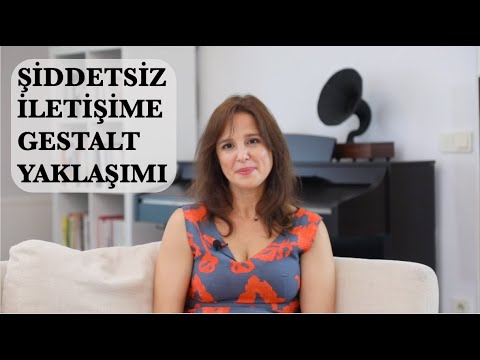 A Gestalt approach to Nonviolent Communication
Why do we clash, and how do I deal with the violence inside me? (39 min)
 Psychological projection
Who do we judge, and how can we really tell when we're projecting? (40 min)
 Why can't we bear criticism?
Why do we get defensive, even when we know it's fair? (11 min)
Happy reflecting… All videos and writing
Whatever I've learned about life, I've learned from people's quirks.
In Gestalt, change takes a little strangeness: stepping, even slightly, outside the norm. Up for a little strangeness with me?